



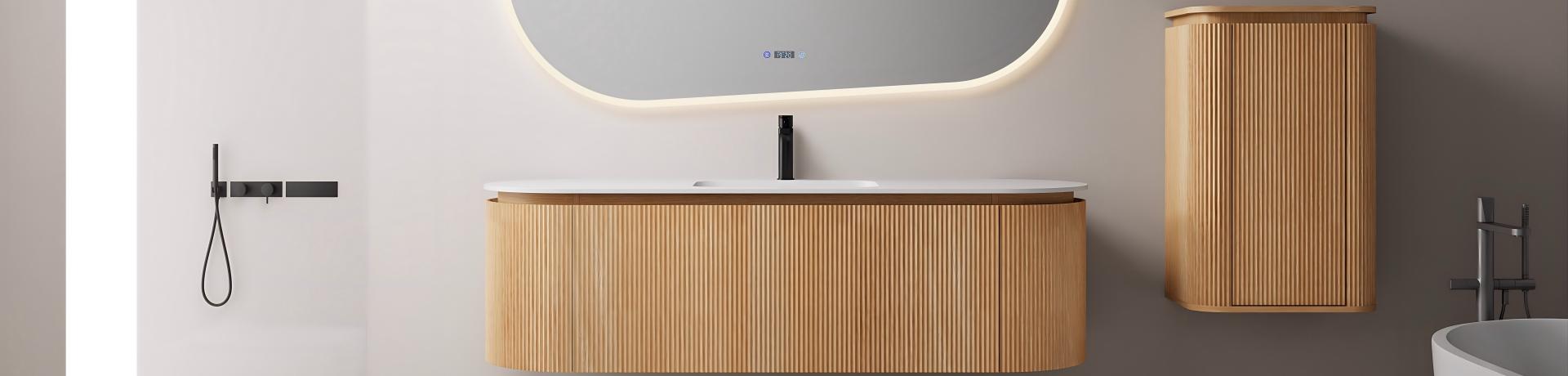
A procurement professional managing a 200-room hotel renovation receives bathroom furniture quotes ranging from 380 dollars per unit to 1,200 dollars per unit for what appear to be similar products. This price spread of more than 200 percent creates confusion and delays decision-making. The natural assumption is that the lowest quote represents the best value, yet experienced buyers know that the cheapest option often becomes the most expensive after installation costs, maintenance expenses, and premature replacement are factored in. Industry data from hospitality procurement associations shows that 67 percent of hotel owners who selected the lowest bathroom furniture quote experienced at least one significant product failure within 18 months, while those selecting mid-range or premium quotes had a failure rate of only 14 percent. Understanding why quotes vary so widely requires examining the specific cost drivers that separate durable commercial products from short-lived alternatives.
The material hiding beneath the decorative surface determines both manufacturing cost and product longevity. Standard bathroom furniture often uses commodity-grade medium-density fiberboard priced at 280 to 350 dollars per cubic meter. This material absorbs moisture readily and swells permanently when exposed to commercial restroom humidity. Premium substrates using hydrophobic resin systems cost 850 to 1,200 dollars per cubic meter, yet they maintain dimensional stability through thousands of humidity cycles. The price difference at the raw material level is substantial, but the performance difference is even larger.
The table below compares substrate material costs and performance characteristics across different quality tiers:
| Substrate Type | Cost per Cubic Meter | 24-Hour Thickness Swelling | Expected Service Life in Commercial Restroom | Relative Longevity |
|---|---|---|---|---|
| Commodity MDF | $280 - $350 | 18 to 25 percent | 1 to 2 years | Baseline |
| Standard Moisture-Resistant MDF | $450 - $600 | 10 to 15 percent | 2 to 4 years | 2x |
| Premium Waterproof Substrate | $850 - $1,200 | 2 to 4 percent | 8 to 12 years | 6x to 8x |
| JIADE Commercial Substrate | Included in integrated system | 1.8 to 2.2 percent | 10+ years | 8x to 10x |
JIADE manufactures bathroom furniture using an integrated substrate system where the waterproof core and surface layers bond during pressing rather than in separate steps. This approach eliminates the adhesive layer that fails in standard construction, while the substrate cost reflects the full system value. The higher upfront material cost delivers a product that survives commercial conditions for a decade or more, making the annual cost lower than any commodity alternative.
The way a bathroom furniture piece receives its finished surface creates enormous quote variation. Direct printing applies a decorative pattern directly to the substrate followed by a clear topcoat. This method costs 8 to 12 dollars per square meter but provides minimal protection against moisture or chemicals. Thermal fusing bonds a decorative paper impregnated with resin directly to the substrate under heat and pressure, costing 18 to 25 dollars per square meter with moderate durability. High-pressure laminate applies multiple resin-soaked kraft paper layers with a decorative surface, costing 35 to 50 dollars per square meter and providing excellent durability.
Quotes that seem unusually low almost always use direct printing or thin thermal fusing. These finishes fail rapidly under commercial cleaning protocols. Hospitality industry testing shows that direct-printed surfaces lose 60 percent of their abrasion resistance after 200 cleaning cycles with quaternary ammonium disinfectants. High-pressure laminate surfaces retain 95 percent of original abrasion resistance after the same exposure. JIADE uses a multi-layer resin system that combines the durability of high-pressure laminate with the seamless application of thermal fusing. This proprietary finishing method costs more than commodity approaches but delivers commercial-grade performance that standard finishes cannot match.
Edge processing represents one of the largest hidden cost variables in bathroom furniture quotes. Basic edge banding uses 0.4 millimeter PVC tape applied with hot-melt adhesive. This method costs 1.50 to 2.50 dollars per linear meter but fails quickly in humid environments. The adhesive softens at temperatures above 50 degrees Celsius, and the thin tape provides no protection against impact damage. Premium edge processing uses 2 millimeter ABS or polyurethane edging applied with moisture-cured adhesive, costing 5 to 8 dollars per linear meter. The best practice involves liquid sealant applied to cut edges before any banding, adding 3 to 5 dollars per linear meter but providing complete moisture protection.
A standard Bathroom Vanity has approximately 15 linear meters of edge surface. The difference between basic banding at 2 dollars per meter and full sealing with premium banding at 12 dollars per meter is 150 dollars per unit in manufacturing cost. Suppliers who omit proper edge sealing can offer quotes that appear highly competitive, but the resulting product swells and fails within months in commercial restrooms. Field inspection data from 1,200 hotel bathroom vanities showed that units with basic edge banding had a 73 percent failure rate from edge swelling within 24 months, while units with full liquid edge sealing had a 4 percent failure rate.
Drawer slides, hinges, handles, and fasteners account for 8 to 15 percent of total bathroom furniture manufacturing cost, but the range between lowest and highest quality hardware is extreme. Economy slides rated for 20,000 cycles cost 4 to 6 dollars per pair and typically fail within 18 months of commercial use. Premium soft-close slides rated for 100,000 cycles cost 18 to 25 dollars per pair. Stainless steel hinges with corrosion-resistant coating cost 6 to 10 dollars each, while zinc alloy hinges with basic plating cost 1.50 to 2.50 dollars each.
Hardware cost differences multiply across a large hotel project. A 300-room property with two vanity drawers and one cabinet door per room requires 600 drawer slides and 300 hinges. The difference between economy hardware at 8 dollars per room and premium hardware at 40 dollars per room is 9,600 dollars total. Suppliers quoting lower prices almost always specify the lowest-grade hardware available. JIADE specifies commercial-grade soft-close slides and stainless steel hinges as standard on all hospitality bathroom furniture. The higher hardware cost is offset by elimination of maintenance calls and guest complaints about sticking drawers or misaligned doors.
Where a supplier manufactures bathroom furniture dramatically affects quoted prices. Offshore production in low-labor-cost regions can achieve direct manufacturing costs 40 to 50 percent lower than domestic production. A vanity that costs 200 dollars to produce offshore might cost 350 dollars to produce domestically. However, offshore quotes rarely include the full landed cost. Ocean freight adds 15 to 25 dollars per unit for a standard container shipment. Tariffs and import duties add another 8 to 15 percent. Inland transportation from port to job site adds 10 to 20 dollars per unit. Customs clearance fees, warehousing, and inventory carrying costs add further expenses.
More importantly, offshore production creates delivery risk that domestic manufacturing avoids. Global shipping data shows that container transit times from Asian manufacturing hubs to North American ports averaged 52 days in the past year, compared to 28 days pre-pandemic. Port congestion added 12 to 20 days of additional delay. A bathroom furniture supplier manufacturing offshore cannot guarantee on‑time delivery when ocean freight schedules are unpredictable. JIADE manufactures regionally, with production facilities located within 800 kilometers of major hospitality markets. This regional approach eliminates ocean freight uncertainty, reduces transportation costs, and allows last-minute schedule adjustments that offshore suppliers cannot accommodate.
The presence or absence of systematic quality control creates quote variation that reflects real cost differences. Suppliers who skip intermediate quality checks can offer lower prices because they spend less on inspection labor and testing equipment. However, defects discovered after installation cost 10 to 20 times more to correct than defects caught in the factory. A scratched finish caught before packing requires 5 minutes of rework. The same scratch discovered on a job site requires 45 minutes of technician time plus the cost of touch-up materials and potential room downtime.
Industry data from hospitality renovation projects shows that suppliers without formal quality control systems have an average defect rate of 8 to 12 percent measured at job site receipt. Suppliers with ISO 9001-certified quality systems and in-process inspection maintain defect rates below 1.5 percent. The cost of rework for a 300-room project with a 10 percent defect rate is approximately 45,000 dollars in labor and material, plus 120 hours of room downtime. JIADE operates seven in-process quality checkpoints that inspect every bathroom furniture unit before it advances to the next production stage. This system adds 4 percent to manufacturing cost but reduces field defects by 85 percent compared to industry average.
Some bathroom furniture quotes include only the physical product. Others include design assistance, shop drawings, installation support, and post-installation service. These engineering and design services have real value that should appear in quote comparisons. A supplier providing full design support invests 15 to 25 hours of engineering time per hotel project, representing 2,000 to 3,500 dollars in cost. A supplier providing no design support offers a lower quote but transfers those costs to the buyer, who must hire independent design services.
Comprehensive service packages also include mock-up units for client approval, on-site installation training, and dedicated project coordination. JIADE includes all these services as standard for hospitality projects. A dedicated project coordinator manages each order from design through delivery. Shop drawings are provided for client approval before production begins. Mock-up units allow verification of finish and fit before full production runs. Installation support includes written protocols and on-site training for general contractor crews. These services are invisible in a simple price comparison but essential for project success. Buyers who select suppliers based only on product cost often find themselves managing design issues, schedule conflicts, and installation problems that a full-service supplier would have handled.
Evaluating bathroom furniture quotes requires a structured framework that accounts for the cost drivers described above. The table below presents a quote comparison checklist that separates apparent price differences from true value differences:
| Quote Component | What Low-End Quotes Typically Include | What JIADE Quotes Include | Value Difference |
|---|---|---|---|
| Substrate | Commodity MDF, no water resistance | Hydrophobic resin-impregnated substrate | 8x to 10x service life |
| Surface finish | Direct print or thin thermal fuse | Multi-layer resin system with ceramic reinforcement | 5x abrasion resistance |
| Edge sealing | 0.4mm PVC tape, hot-melt adhesive | Liquid sealant plus 2mm polyurethane edge | Eliminates edge swelling |
| Hardware | Economy slides, zinc hinges | Commercial soft-close slides, stainless steel hinges | 100,000-cycle rating |
| Quality control | Final inspection only | 7 in-process checkpoints | 85 percent fewer field defects |
| Design services | None | Shop drawings, mock-up, project coordination | Risk reduction |
| Delivery guarantee | None | Financial guarantee with daily credits | Schedule protection |
The lowest quoted price rarely represents the lowest total project cost. A bathroom furniture unit that costs 400 dollars but fails within two years has an annual cost of 200 dollars. A unit that costs 900 dollars and lasts ten years has an annual cost of 90 dollars. The higher initial quote delivers better long-term value. Beyond direct costs, the cheaper product generates maintenance expenses, guest complaints, and renovation disruption that the premium product avoids.
JIADE bathroom furniture quotes reflect the full cost of commercial-grade materials, comprehensive edge sealing, premium hardware, systematic quality control, and complete design services. The price is higher than commodity suppliers because the product delivers commercial performance that commodity products cannot match. For procurement professionals who have experienced the hidden costs of low bids, the value of a supplier who stands behind both product quality and delivery commitments justifies the investment. The variation between bathroom furniture quotes is not random. It directly reflects the materials, processes, and services that determine whether a product survives commercial conditions or fails within months.
Previous:
Next: What causes waterproof MDF to swell in commercial restrooms